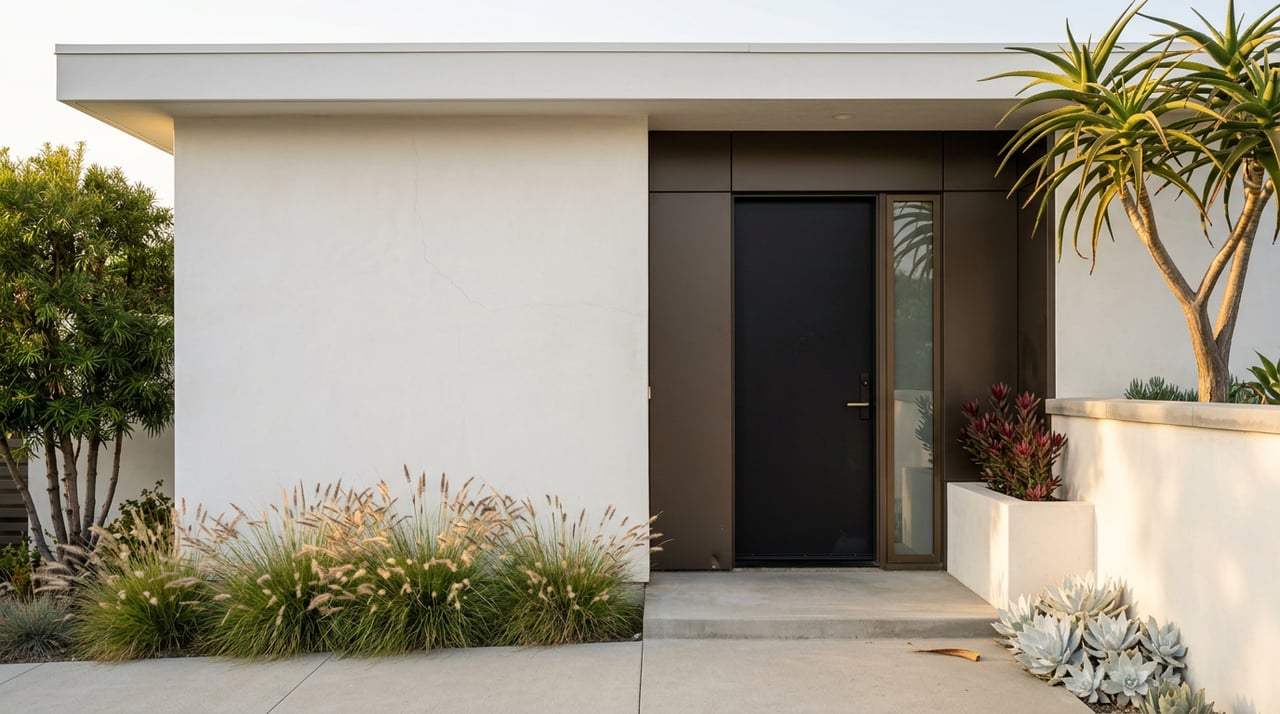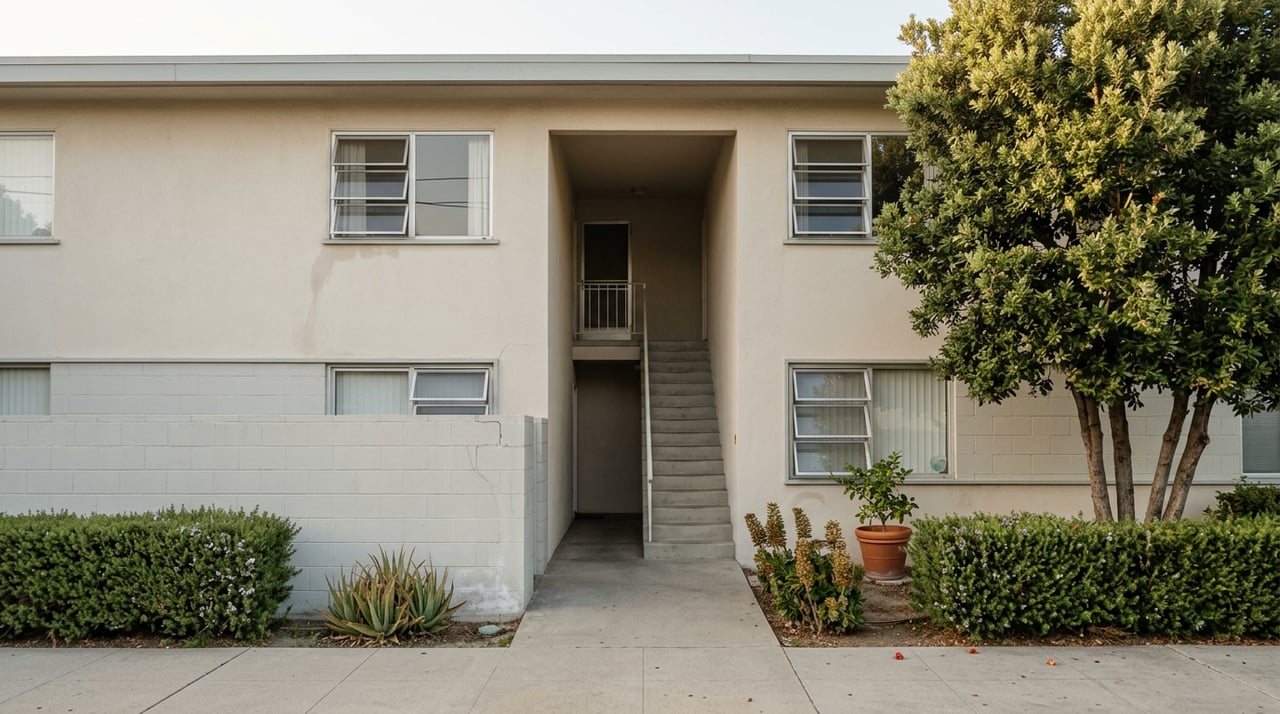
Two duplexes sit on the same block in Ocean Park. Same lot size, same 1962 construction, same two-bedroom unit mix. A buyer touring both would reasonably expect similar offers to land within a few percentage points of each other. They wouldn't. The gap between what these buildings actually trade for can run 15 to 25 percent, and the difference has nothing to do with the kitchen finishes or the roof age. It comes down to what the current tenants are paying relative to what the market would pay, and whether that gap is locked in by a rent control law that has governed this city since April 1979.
If you're evaluating a multi-unit property in Santa Monica, the square footage on the listing sheet is not the number that matters most. The number that matters is buried in a rent roll, a public database, and sometimes a filed agreement at the City Clerk's office. Here's how to find it before you write an offer, not after you're in escrow.
The one date that changes everything
Santa Monica's Rent Control Charter Amendment, adopted by voters in April 1979, applies to residential rental units in buildings that received a certificate of occupancy before April 10, 1979. That single cutoff sorts nearly every rental building in the city into one of two entirely different financial categories. A pre-1979 duplex, triplex, or larger apartment building falls under the city's Rent Stabilization Ordinance, meaning existing tenants can only see rent increases set annually by the Rent Control Board. A comparable building that received its certificate of occupancy after that date is not subject to local rent control at all, though it may still be governed by California's statewide Tenant Protection Act, a separate and generally looser cap.
This is why the certificate of occupancy date belongs on your due diligence checklist ahead of the inspection contingency. A buyer who assumes "1960s building, must be rent controlled" or "recently renovated, must be exempt" is guessing at the single fact most likely to determine the building's actual cash flow.
What the annual number is really telling you
Every year, the Rent Control Board sets a general adjustment, the maximum percentage increase a landlord can apply to existing tenants in a controlled unit. The formula is mechanical: 75 percent of the change in the Los Angeles-area Consumer Price Index over the twelve months ending in March. For the 2025 to 2026 cycle, the Board set that adjustment at 2.3 percent. At its June 11, 2026 meeting, the Board announced the 2026 general adjustment at 2.6 percent, effective September 1, 2026, based on a reported CPI change of 3.4 percent for the twelve months ending March 2026, and imposed a $70-per-month ceiling on any single increase. That cap applies to any unit with a Maximum Allowable Rent of $2,674 or higher, which in practice means most Santa Monica units already near market rate hit the dollar ceiling rather than the percentage. As of this writing, that new adjustment hasn't even taken effect yet, so any rent roll a seller hands you today is still running on last year's numbers.
Run that forward. A unit renting for $1,400 because the tenant moved in decades ago compounds slowly off a low base, even at 2.6 percent a year. A unit that turned over recently and reset near market rent grows by the same percentage off a much higher number, until it too hits the $70 cap. Two units in the same building, subject to the identical law, can be diverging in dollar terms every single year. That's the mechanism behind the price gap between those two Ocean Park duplexes: one building's rent roll is clustered near market, the other's isn't, and the law that governs both of them guarantees the gap won't close quickly on its own.
How to check this before you offer, not after
The city runs a Maximum Allowable Rent lookup that is updated nightly and available to the public. Before writing an offer on any pre-1979 Santa Monica multi-unit, pull the MAR for every unit in the building and compare it to what the seller's rent roll claims. The city is candid that this data reflects owner-reported figures that haven't been independently verified, so it's a cross-check tool, not a substitute for the seller's actual leases. But a wide, unexplained gap between the MAR record and what a listing packet claims tenants are paying is worth a direct question before you're past your contingency period.
A short list of what else to confirm during due diligence:
- The certificate of occupancy date, which determines RSO coverage in the first place
- Current Maximum Allowable Rent for each unit, pulled independently from the city's database
- Whether any buyout agreements have been filed with the City Clerk, and if so, the amount and date
- Whether an Ellis Act withdrawal has ever been filed on the property
- The seller's Transfer Disclosure Statement, Seller Property Questionnaire, Natural Hazard Disclosure, and RSO registration status, all of which are required at offer acceptance for covered properties
What a filed buyout agreement actually tells a buyer
If a seller has already tried to clear a unit, there's a paper trail, and it's more useful to a buyer than most people realize. Under the city's buyout ordinance, a landlord who offers a tenant money to vacate must give written notice of the tenant's rights before the offer is made, and the agreement itself must be filed with the City Clerk between 31 and 60 days after all parties sign. The tenant retains the right to rescind for up to 30 days after execution, and the minimum buyout amount can't be less than the permanent relocation fee required under the municipal code, which as of early 2026 runs approximately $23,000 to $24,000 per unit.
For a buyer, a filed buyout agreement on record is a data point, not a red flag. It tells you a previous owner already tested the market cost of clearing that specific unit, and it gives you a real number instead of a guess when you're underwriting your own path to market rent.
The Ellis Act as underwriting, not a last resort
For an investor evaluating a rent-controlled building with the intent to reposition it, permanently withdrawing the property from the rental market under the Ellis Act is a formal, regulated path, not a workaround. It requires filing with the Rent Control Board, paying above-average relocation assistance set by the Board, and providing at least a 120-day notice period, extending up to a year for qualifying senior or disabled tenants. None of this is a shortcut. It's a cost and timeline that belongs in your pro forma from the first offer, not a surprise your attorney raises during escrow.
It's also worth remembering that the regulatory environment here keeps moving. The Rent Control Board took positions on state legislation as recently as 2025, including opposition to a transit-adjacent upzoning bill and support for a bill regulating rent-setting software, and voters expanded eviction protections through Measure RR. A comp from two years ago, or a rule of thumb from a friend who bought in Sunset Park in 2019, isn't a substitute for checking where the law and the Board's posture stand this month.
What this means if you're the one buying
If you're a trade-up buyer looking at a Santa Monica duplex with the idea of living in one unit and renting the other, the certificate of occupancy date determines whether your future tenant relationship is governed by the city's rules or the state's looser ones, which changes what flexibility you'll have down the road. If you're an investor pricing a value-add repositioning, the gap between current rent and Maximum Allowable Rent is the actual asset you're underwriting, and the buyout and Ellis Act paperwork trail tells you what it has already cost, or will cost, to close that gap. Either way, the number that matters most here was never on the listing sheet. It's in a public database and a filing cabinet at the City Clerk's office, and it's available to anyone willing to look before they write the offer.
If you're weighing a multi-unit purchase or considering the timing on selling a rent-controlled building in Santa Monica, this is exactly the kind of due diligence Shelton Wilder walks clients through before an offer goes in, not after. Schedule a private consultation with Shelton Wilder to talk through what a specific building's rent roll and paperwork trail actually mean for your numbers.
A few direct questions
Does rent control apply to condos in Santa Monica? It depends on the certificate of occupancy date and the unit's history, not the fact that it's titled as a condo. A unit in a building that predates April 10, 1979 can still fall under the city's rent stabilization rules even after conversion, so the same due diligence applies.
If I buy a rent-controlled building, am I stuck with the current tenants forever? No, but ending a tenancy requires a legally recognized just cause, proper notice, and in many cases relocation payments. Owner move-in and Ellis Act withdrawals are both valid paths, each with its own notice period and cost structure.
What if the seller already filed a buyout agreement on a unit that's now vacant? That's useful information, not a liability. The filed agreement and its amount are matters of public record with the Rent Control Board, and reviewing it gives you a real cost benchmark instead of an estimate.